




Blog
How to Print Wedding Programs for Reception Tables
What to include, original ideas, design and printing for a newspaper-style wedding program.
How to print wedding programs for reception tables
A wedding program is the little booklet your guests receive on arrival that tells them exactly where to go, when, and with whom. Most couples go for classic stationery cards. An alternative is gaining ground: printing the program as a tabloid newspaper on 60 gsm newsprint, which stands out on the welcome table and doubles as a keepsake.
Here is how to design yours, what to put in it, and how to get it printed as a wedding newspaper with PrintNewspaper, with no minimum order.
What is a wedding program really for?
A wedding program does three jobs, in this order.
First, it guides your guests. Ceremony at 2pm, cocktail hour at 4:30pm on the lawn, dinner at 8pm in the barn: without a printed program, you will answer the same questions fifty times on the big day. Hand one out on arrival and you save your voice while your guests find their own way.
Second, it sets the mood. A well-crafted program on good paper, with a layout that reflects your style (rustic, boho, vintage, modern editorial), extends your table decor and gives the whole day a consistent look.
Third, it becomes a keepsake. Guests rarely keep a folded menu, but they happily tuck a newspaper into their bag. Especially when it mentions their name, their table or a story about them.
Classic card or newspaper: which format to choose?
Traditional stationery shops will offer you a card program, usually square, postcard-sized or designed as a boarding pass. It is elegant, clean and easy to slip into an envelope with the invitation.
The newspaper format plays in a different league. A press printer offers two sizes:
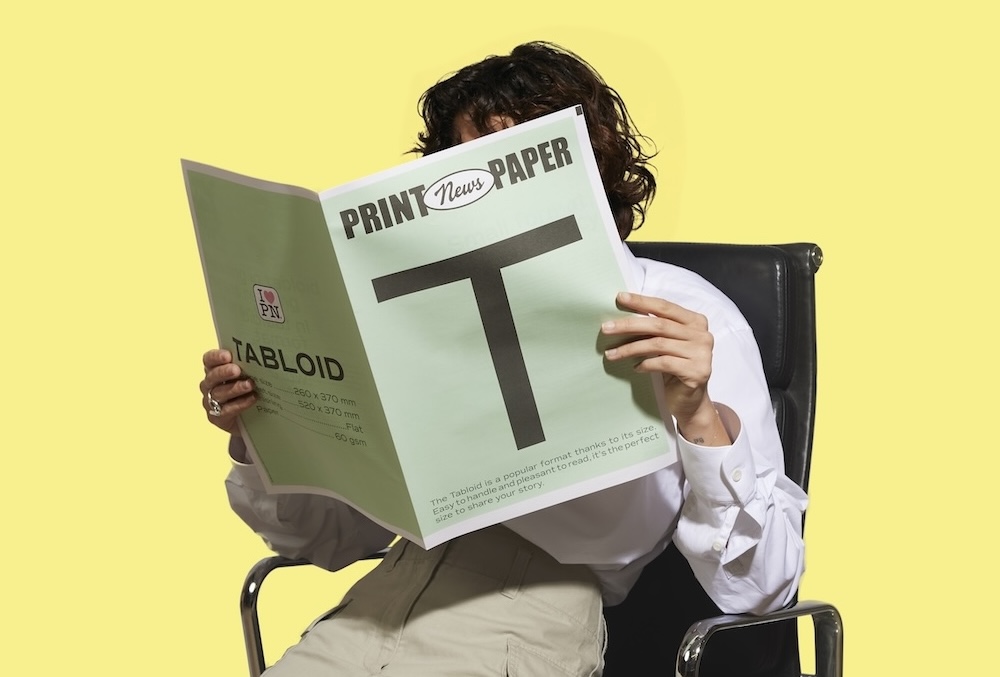
The tabloid, 260 × 370 mm (10.2 × 14.6 in), is the most popular format. Easy to hold, generous in surface, it fits a complete timeline of the day across 4 to 8 pages without feeling crowded. It is the default choice for a wedding program that wants to stand out without overdoing it.
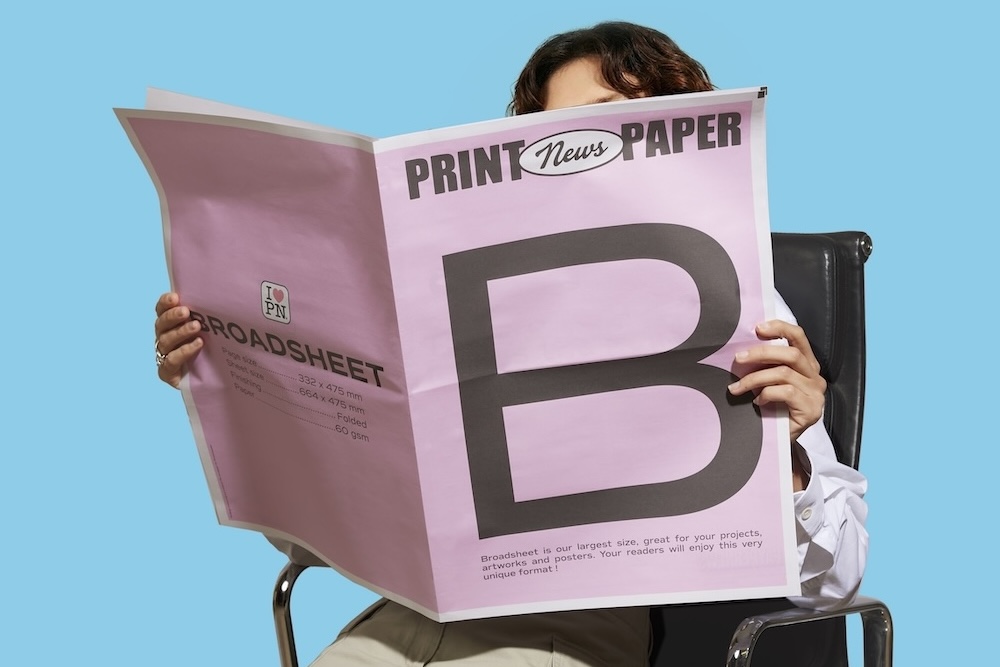
The broadsheet, 332 × 475 mm (13.1 × 18.7 in), is the large historical format of national dailies. Visually striking, it is perfect if you want the program to become a centerpiece on the tables, or if you have a lot of content to share (detailed schedule, wedding party bios, games, words from the parents).
In both cases, page counts go in multiples of 4: 4, 8, 12 pages, up to 48 in a single section. For a wedding program, 4 to 8 pages is plenty.
What to include in your wedding program
There is no one-size-fits-all template, but some sections appear in almost every successful program.
A front page with the couple's names, the date, the venue and ideally a photo. The newspaper format allows a large cover image, like the front page of a daily, with a bold headline. This is what makes guests want to flip through.
The minute-by-minute timeline of the day, as a table or a vertical timeline. Ceremony, cocktail hour, dinner, party, next-day brunch. Specify the location if several venues are involved.
Maps and practical info: a simple map of the venue, parking, coat check, info desk, nearby accommodation, shuttles. One page is enough if you keep it concise.
The wedding party and key people, introduced in a few lines each. It helps guests who don't all know each other, and it is a nice nod to the people concerned.
A note from the couple, short and sincere, thanking guests for being there. A few lines at most, or it turns into a speech.
5 original ideas to include (that nobody does)
A guest glossary: who's who and how they know the couple, two lines per person or couple. Guests love it, and it instantly breaks the ice between tables.
A "Who said it?" quiz about the couple. Fill it in during cocktail hour or dinner, reveal the answers during the speeches.
Wedding bingo with the day's classics (the bride cries during her vows, Uncle Bob retells his own wedding speech, first spilled glass before 10pm). A playful format that lightens the tone.
A childhood photo spread of the couple, celebrity-gossip style, with funny captions.
A couple's horoscope or a mock wedding weather forecast, just like in a real newspaper. The press format allows the kind of wink that card programs can't.
Designing your layout in Canva or InDesign
Two tools lead the way for the layout.
Canva is the most accessible. The free plan is enough for a 4 to 8 page program. Remember to export a high-resolution PDF at 300 DPI minimum, and above all to convert your colors to CMYK before exporting: screens display RGB, printers work in CMYK, and without that conversion reds turn orange. Newsprint also absorbs more ink than standard coated paper, so boost contrast and saturation slightly to compensate.
InDesign remains the reference for anyone comfortable with column layouts. Export as PDF/X-1a with 10 mm (0.4 in) technical margins.
To save time, free templates are available right on the site, including a "Wedding Program" template already set up for tabloid format. To go further on designing a complete newspaper layout, our guide to the personalized wedding newspaper covers the whole process, from front page to final section.
Printing your program: what you need to know
Unlike classic card printing, newspaper printing runs on CMYK inkjet web presses, the same machines that produce the dailies sold at newsstands. Your wedding programs come off the same equipment, with the same industrial quality.
A few things to know before you order:
No minimum order. You can print a single copy first to check the paper and colors, then launch your final run.
Standard production time of 2 to 5 business days after your approved PDF is received. In most cases, your order ships the next day.
60 gsm matte off-white paper, FSC and PEFC certified. It is the exact weight of real newsprint, with its distinctive matte texture.
No staples, no glue: pages are folded and nested just like on a newspaper press, giving the professional look of a real publication. For the technical steps in detail, this guide walks you through printing a wedding newspaper, from layout to delivery.
How many copies to order for your wedding?
The rule of thumb: 1 program per household, not per guest. If you are hosting 100 people across 50 couples or families, 55 to 60 copies are plenty. Add 5 to 10 spare copies for the parents, the photographer, personal keepsakes, and one or two for your own archives.
A typical wedding program run is between 30 and 150 copies. That is exactly where digital web-press printing makes the most sense, since it avoids the setup costs of a traditional offset press.
The mistake half of all couples make
They print the program last, after the invitations, menus, place cards and table numbers. By then they are already overwhelmed, the schedule has slipped, and the program gets rushed over two evenings with no consistency with the rest of the stationery.
The smart move: design your program at the same time as your menus. They are the two pieces that share the visual identity of the day, and your guests will hold them at the same moment. You will save time and avoid style clashes between them. Once the basics are in place, you can enrich the program with more creative newspaper sections: here is what to put in a wedding newspaper.
Where to start
Three steps, in this order.
Step 1. Order a free sample to feel the newsprint and judge the color rendering. It costs nothing, avoids bad surprises and gives you a tangible reference to brief your designer, if you have one.
Step 2. Choose your format (tabloid or broadsheet) and grab the free "Wedding Program" template, ready to customize in Canva at the right trim size.
Step 3. Fill in the template with your timeline, portraits and original sections. Export a high-resolution CMYK PDF, then place your order online, from 1 copy, no minimum.
The stress-free timeline: finalize your PDF three weeks before the wedding. That leaves room for a color test if needed and keeps you safe from last-minute surprises, including shipping time to your country. The price simulator on the site instantly gives you the total cost based on your format, page count and quantity.